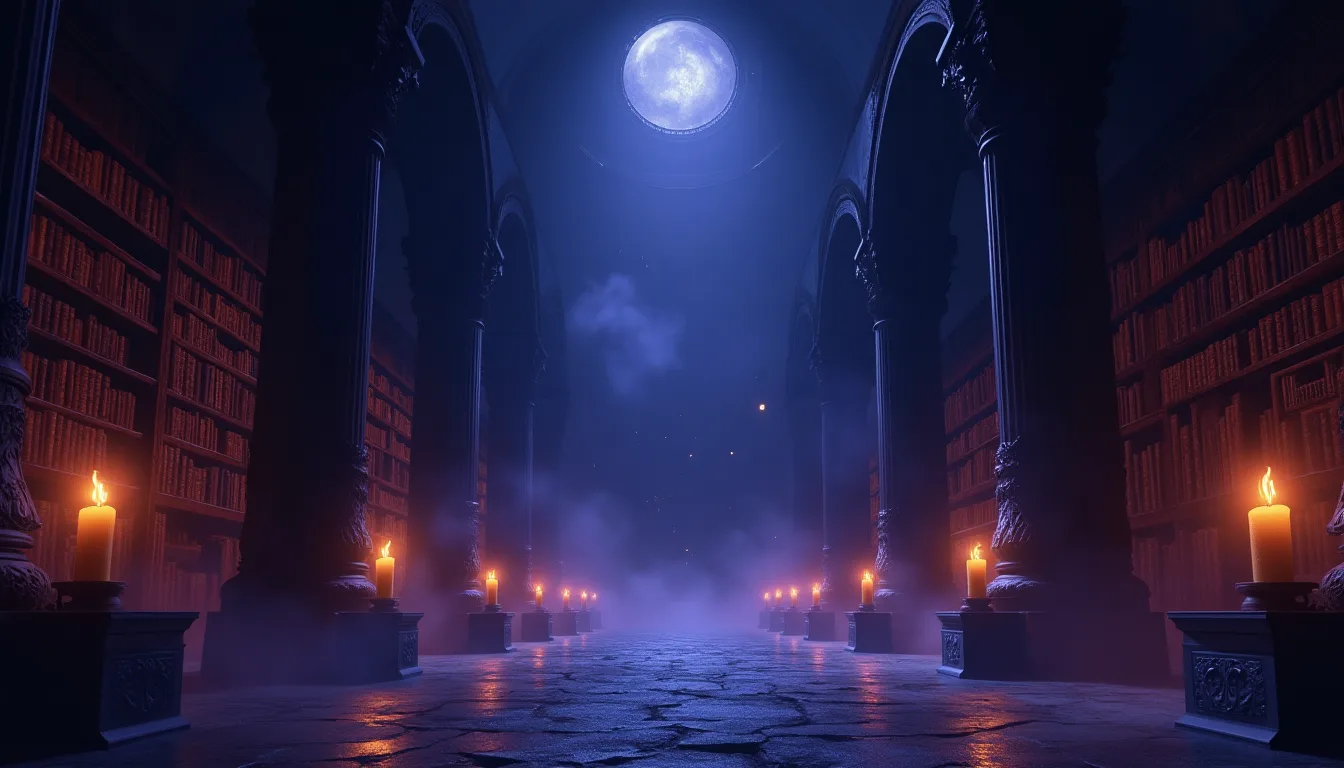
The Codex
The world of Arcana
Arcana is set in the Dealt Lands: a small, argued-over world that lives under a tarot reading nobody laid and nobody owns. This is what its people believe about it — where they are, who rules them, what turned the sea over, and which positions of the Spread have never been dealt at all.
This is the story half of the Codex. The rules half — how Arcana is actually played — states every quantity the game runs on, and this page states none of them.
22
Positions in the Spread
20
Dealt, and written about
2
Never turned over
2
Chapters on the shelf
Above every field
The Spread
A reading hangs over the world. It was not laid by any hand anyone can name, it answers to no crown, and both armies stand under exactly the same one.
The Spread is the oldest thing the Dealt Lands can agree on, and the only thing every people describes the same way. It is a fixed set of positions, laid face down, and it has never been laid twice. A position turns; for a while the world is what that card says it is; then it turns again, and the world is something else. Kingdoms have been founded on the strength of one good turn and buried by the next.
What a turned arcana does is not a suggestion, and it is not a blessing granted to the deserving. Under The Chariot an army that arrived at dawn fights at dawn — the tiredness of the road is simply not in the men. Under The Serpent every scratch is mortal, and the largest thing on the field dies as easily as the smallest. Under The Veil an oath does not bind, a ward does not hold, and the gift a creature was born with is not there when it reaches for it. Nobody is exempt. Generals do not petition the Spread. They read it, and decide what the hour is good for.
That is the part outsiders find hardest to believe: the reading is not a weapon, because it cannot be aimed. It falls on both sides at once, in the same measure, with no interest in which of them is right. A captain who has learned to love the arcana that suits their army has learned how to lose, because it will turn.
The shape of a reading is always the same, whatever it contains. It opens mildly — light, growth, small mercies, the kind of turn under which a careful people can build something. It bends in the middle, where the ordinary rules of the world stop being reliable and a commander who has not been paying attention discovers it at the worst possible moment. And it ends in arcana that will not permit anything to continue: crowns bleed by the round whether or not anyone strikes them, the ground takes back everything standing on it, and whatever the argument was, it is settled soon.
The last position does not rotate away. This is the one mercy in the design and the one cruelty: no war in the Dealt Lands has ever been able to outlast its own reading. Sieges here are short. Everyone knows why.
Read under— the rule each one actually deals, from the engine
- The ChariotUnits can attack the turn they are played.
- The SerpentAny damage a unit takes in combat destroys it.
- The VeilUnit keywords and abilities have no effect.
- The WorldAs this arcana turns over, every unit is destroyed.
His whole office is the positions that were never dealt. It is a large office.
Where it happens
The Dealt Lands
The known world is exactly as large as the reading over it. Everything past that edge is rumour, and there has never been a shortage of rumour.
People here call their world the Dealt: the country the Spread has been seen above, which is to say the country whose history can be told in order. It is not large. It is a crown, a tower, a forest, a mountain range, a field of barrows and a coast — with disputed ground between every pair of them, and the disputed ground is where nearly everything in this game happens.
At the centre is the Capital, on the Crown Road, and it has never been taken. Almost nobody who dies for it has seen it. The border it keeps is a month's hard ride out and moves a little every year, and the patrols walk it anyway, in the weather, on foot, past markers that were accurate a reign ago.
Inland and north stands the Tower, which has no stairs and no gate and does not consider this a problem. The Arcane are the only people in the Dealt Lands who study the Spread as a discipline rather than as an omen, and the Tower is widely believed to know more than it says. It does. The suspicion that follows from that is also fair.
West is the forest, which is older than the Capital's word for it and has never accepted the word. It has stood through four kingdoms and does not distinguish between them. Its wardens do not patrol a border, because the forest does not have one; it has a distance past which people stop coming back, and the distance is a matter for the forest.
East and upward are the mountains, quarried so long that the giants living in them regard the quarrying as a kind of weather. A giant's year is a short human life. A giant's grudge is a landscape feature, and there are several.
South are the barrow fields: the largest population in the Dealt Lands, the only one still growing without anyone being born into it, and the one that keeps the best records.
And there is the coast, which for most of recorded history was where the map politely stopped. It is now the most contested ground in the world. That happened recently, and it happened in a single night.
It has stood through four kingdoms and does not distinguish between them.
How it got here
The ages, in order
Nothing in the Dealt Lands is dated from a coronation. Everything is dated from a turn — which is why the histories of six mutually hostile peoples agree with each other almost perfectly.
An age here begins when a position of the Spread turns over that had not turned before, and it lasts until the next one does. Nobody planned that convention. It is simply the only calendar the six tribes have ever been able to keep together.
The First Reading
Where the chronicles start
Chronicles begin midway through a sentence. There is writing older than the first recorded turn and it is all inventory: grain, cattle, names. Then a position comes up, somebody writes down what changed, and from that morning the world has a sequence.
Whether the Spread began then or was merely noticed then is the oldest argument the Tower has. It has never been settled, because settling it would mean reading a position that has not turned.
The Age of Four Kingdoms
Four crowns, four endings
Four crowns rose in the Dealt Lands and four crowns fell, each of them under an ending arcana, and each of them convinced this was unfair. It was not unfair. It was the reading doing across a season what it does across an afternoon: refusing to let an unfinished argument stay unfinished.
The oldest living things in the world — the treants, the deep colossi, one or two of the sovereigns in the barrows — remember all four and are sentimental about none of them.
- Elder Treant
It has stood through four kingdoms and does not distinguish between them.
The Burning of the Archive
The one failure the Tower admits to
The Tower's great project was to read ahead: to work out, from every turn ever recorded, which position comes next. By its own account it was close.
What burned was not the Tower but its copy of the world — the archive of every reading anyone had written down. It burned from the inside, in an afternoon, in a manner the Tower has never published an account of. The Arcane have been re-copying ever since: from memory, from provincial duplicates, and from the barrows' own meticulous ledgers, which are older, better kept, and lent out on terms the Tower has never disclosed.
- Apprentice Mage
His first spell singed his eyebrows. His second burned the archive.
The Turning Age
The age now
Dated from the night The Moon was dealt for the first time in living memory, after which everything under it had to be read again.
It is the shortest age in the record and by a distance the strangest, and the people who lived through its first night still describe it in the present tense.
- Ferryman of Ash
The fare has never changed. Only what people have left to pay it with.
Read under— the rule each one actually deals, from the engine
- The TowerAt the start of each round, both heroes lose 2 health.
- The MoonUnits strike for their health instead of their attack.
Who fights
The six tribes
Every unit in the game belongs to exactly one of them. They are not factions in a war with fronts — they are the six ways of being a power in the Dealt Lands, and most of them have been on every side at least once.
A tribe is not an alliance and not a species. It is a way of surviving, and it decides what a body is worth: whether it matters more standing beside its own, whether it is stronger by the round or by the season, whether it is finished when it falls. That is why a deck built inside one tribe plays like a single argument, and a deck that ignores tribes entirely plays like a paid crowd.
Order
The crown, the roster and the line
Order is the Capital, the Crown Road, the border patrols and the temple that outranks all three on the days it chooses to. It is the only tribe organised as a list: every soldier is on a roster, every roster reports somewhere, and the somewhere reports to a woman most of them will never see.
Its whole strength is standing next to somebody. Order units are seldom the largest thing on a field and are almost never alone on it; a banner, a horn, a captain saying names until they are answered — the tribe's real weapons are the ones that make everybody else half a step better. Break the line and the individual soldiers are ordinary. That is not a weakness the Capital has failed to notice. It is the doctrine.
The temple sits inside Order and does not quite obey it. Its inquisitors answer questions the crown would rather were not asked, its choirs sing in cathedrals that fell a century ago, and its paladins swear oaths older than the kingdom that heard them. Order tolerates this because the temple has never once been wrong in public.
- Standard Bearer
Both his hands are needed for the banner. He has never once been struck.
- Paladin of the Order
Her oath is older than the kingdom that heard it.
- High Inquisitor
She asks one question. The answer decides how long the rest of the day is.
- Queen Aureia
Her guard never sleeps. Neither, whisper the courtiers, does she.
Arcane
The Tower, the archive and the borrowed hour
The Arcane are the only people who treat the Spread as a subject. Everyone else reads it the way sailors read weather; the Tower reads it the way an auditor reads a ledger, looking for the entry that does not balance.
This makes them the most dangerous tribe on a good turn and the most exposed on a bad one. Arcane power is borrowed against what the reading currently permits — cheap when the arcana is generous, ruinous when it is not, and simply absent under The Veil, which is the one condition the Tower has never found a way to work around. An archmage under The Veil is a well-dressed person in a field.
They are also the tribe most changed by the Turning Age. Half the Tower's new adepts cast from reflections now, or from the far side of a dream, or out of a lantern that holds no flame at all. The senior faculty call this a fashion. The senior faculty have started locking their mirrors.
- Archmage of the Tower
The tower has no stairs. She has never needed them.
- Runesmith
He hammers words into iron until the iron obeys them.
- Mirrorlit Adept
She casts from the reflection, so the spell arrives from the wrong side.
- Weaver of Waning Dreams
He unpicks the dream you were going to have and hands the thread to someone else.
Wild
The forest, and everything that agrees with it
Wild is not the animals — that is the Beasts, and the two tribes find the confusion tiresome. Wild is the growing world itself: treants, groves, sprites, fog, moths, wisps, and the things that live in the parts of the forest nobody has surveyed.
It fights on a completely different clock. A Wild thing that is losing is frequently not finished, only interrupted, and the wardens who hold the deep groves are older than most of the sieges brought against them. Where Order wins by holding a line for an afternoon, Wild wins by still being there in the spring.
It has a crown, of a sort, though the forest would put it differently. It does not obey her. It agrees with her, and calls that a crown.
- Grove Warden
The bark closes over each wound before the axe is drawn back.
- Elder Treant
It has stood through four kingdoms and does not distinguish between them.
- Moth of the Pale Lamp
It has been circling the same light since before the lamp was lit.
- Ysmeer, Crown of the Wild
The forest does not obey her. It simply agrees, and calls that a crown.
Beast
The pack, and the arithmetic of the pack
One wolf is a problem for a shepherd. The Beast tribe's entire military thinking is what happens to that sentence when you change the number, and the answer has embarrassed three of the four fallen kingdoms.
Beasts are the tribe that grows on the field rather than before it. Alone, most of them are unremarkable — an old wolf with a grey muzzle, a large dog, a hound. Standing among their own they are something else entirely, and the change is immediate, visible and reversible: kill one and the rest are smaller before the body has landed. Fighting them is an exercise in deciding which one to kill first, under time pressure, incorrectly.
They have no capital and no roster. What they have is a beastlord who speaks to them in their own grammar, and warchiefs who do not lead a hunt so much as announce which way it was already going.
- Pack Alpha
Alone she is a large dog. She is never alone for long.
- Warchief of the Hunt
He does not lead the pack. He decides which way it was already going.
- Beastlord Karrow
He speaks to them in their own grammar, and they answer in his.
- Silverfang Alpha
Alone he is an old wolf with a grey muzzle. He is very seldom alone.
Giant
The mountains, on their own schedule
Giants are the slowest power in the Dealt Lands and the only one that has never lost territory. They do not campaign. They arrive, eventually, and the campaign is then over.
The tribe includes the colossi, which are not born and not exactly built: some were quarried, some were carved by the sea over an unreasonable number of centuries, and one is assembling itself out of the coastline a full moon at a time. A runebound colossus carries the name of another giant on every rune it wears and answers to all of them, which is the closest thing the tribe has to a chain of command.
Their relationship with the Capital is a mutual, courteous misunderstanding. The Capital believes it has a treaty. The mountains believe they have been left alone, which they regard as the same thing and a better deal.
- Quarry Ogre
He was paid in stone and never learned there was anything else.
- Runebound Colossus
Every rune on it is the name of another giant. It answers to all of them.
- Glacier Giant
He moves once a century. This is the century.
- Tidewrought Colossus
The sea spent nine thousand years carving it and has not decided what it is yet.
Undead
The barrows, and the patience of the barrows
The Undead are not a plague and they are not an invasion. They are a jurisdiction. The barrow fields have a sovereign, a bureaucracy, an ossuary that files the dead by the year they forgot they had died, and a birth rate that is somebody else's casualty list.
Nothing about them is in a hurry, because nothing about them needs to be. Their great advantage is that a body they lose is not a body they have spent: what an undead thing does on its way off the field is frequently the reason it was sent there. Trading blows with the barrows is trading with a house that gets paid either way.
It is the tribe that took the Turning Age best. When the shallows started giving the drowned back twice a night, the barrows did not panic. They opened a second office.
- Ossuary Keeper
He files the dead by the year they forgot they had died.
- Bonecaller
He does not shout. He simply keeps saying names until they are answered.
- Morvath, the Bone Sovereign
He rules a kingdom of the patient. Every year his subjects outnumber ours.
- The Drowned Chorus
A whole crew, still holding the note they were holding when the hull gave.
Who rules
The named
Most of the Dealt Lands is anonymous — squires with no crest, patrols with no names, a swarm of rats that is never one rat. These are the exceptions, and every one of them is a card you can hold.
Queen Aureia
The crown on the Crown Road
The fifth crown of the Dealt Lands, and the first that has declined to use the number. Aureia's court is famous for two things: a guard that never sleeps, and a queen the courtiers whisper does not either. She has never publicly corrected them.
Her reign has been an unbroken campaign to make the Capital survivable rather than glorious — rosters, roads, granaries, the tedious apparatus that keeps a kingdom standing when the reading goes against it. The four kingdoms before her were all more beautiful.
- Queen Aureia
Her guard never sleeps. Neither, whisper the courtiers, does she.
The Archmage of the Tower
First reader of the Spread
Whoever holds the office holds the only chair in the world from which the Spread is studied rather than obeyed. The Tower has no stairs; she has never needed them; and no reigning archmage has ever explained the arrangement to an outside authority.
The office survived the Burning of the Archive with its reputation and none of its evidence. It has been rebuilding the record ever since, and it has become quietly dependent on the barrows for the older volumes — a debt the Capital would find alarming if the Tower had ever mentioned it.
- Archmage of the Tower
The tower has no stairs. She has never needed them.
Ysmeer, Crown of the Wild
Not obeyed; agreed with
The forest does not have a monarch and would not know what to do with one. What it has is Ysmeer, whose instructions and the forest's intentions have never yet differed, which everybody outside the treeline has agreed to call a crown.
She has outlived every treaty signed with her. This is not treachery; the treaties were signed with kingdoms.
- Ysmeer, Crown of the Wild
The forest does not obey her. It simply agrees, and calls that a crown.
Beastlord Karrow
Speaks to them in their own grammar
Karrow does not command the packs. He is the only person alive who can put a proposition to them in a form they can answer, and they answer. What the Capital calls a beastlord's army, the packs regard as a season with unusually clear instructions.
He holds no ground and garrisons nothing, which is why the Capital has never worked out where to send an army. A beastlord's territory is wherever the packs happened to agree with him last.
- Beastlord Karrow
He speaks to them in their own grammar, and they answer in his.
Morvath, the Bone Sovereign
A kingdom of the patient
The sovereign of the barrow fields rules the one realm whose population chart only goes one way. He is a legalist, an archivist and, by the standards of everything else in this book, extremely polite — his heralds give notice, his keepers keep receipts, and his claim on a battlefield is always filed afterwards rather than shouted during.
Every year his subjects outnumber ours by a little more. He has never had to say so out loud.
- Morvath, the Bone Sovereign
He rules a kingdom of the patient. Every year his subjects outnumber ours.
The Werewolf Lord
Two courts, one appetite
The most awkward figure in the Dealt Lands: a lord with a seat under the crown's law and a pack under the moon's, and no arrangement anywhere that reconciles them. Both courts are real, both are attended, and neither is told what happens at the other.
The Turning Age has been very good to him and he has been careful not to look pleased about it.
- Werewolf Lord
He rules two courts: one by daylight law, one by moonlit hunger.
Selene, the Waning Crown
Abdicating, at length
The sovereign the coast acquired on the night the sea changed its mind. Selene has been abdicating for two centuries and is not finished being queen; her court measures her authority the way the shore measures a tide, which is to say constantly and without ever calling it a loss.
Her chosen are marked at birth and told at forty. Most of them are gracious about the intervening years.
- Selene, the Waning Crown
She has been abdicating for two hundred years and is not finished being queen.
- Selene's Chosen
Chosen at birth, told at forty, and gracious about the intervening years.
Thalassa, Tide of Bones
Does not raise a fleet
The barrows and the coast met properly for the first time in the Turning Age, and Thalassa is what the meeting produced. She does not raise the drowned. She waits, at the waterline, and the sea hands them up.
Whether she serves the Bone Sovereign, negotiates with him, or is a second sovereign the barrows have not yet admitted to having, is the liveliest question in the Tower's correspondence.
- Thalassa, Tide of Bones
She does not raise a fleet. She waits, and the sea hands one up.
- Grave Tide Warden
He keeps the drowned in order, and when he goes, they inherit the order.
Fenrach, Moonjaw
The old songs are specific
The oldest thing in the Beast tribe and the only one with a prophecy attached: the songs say he will eat the moon. They have said so since before there was a Capital to sing them in.
The moon has made no comment. Since the Turning Age, a number of people have noticed that this is not the same as a denial.
- Fenrach, Moonjaw
The old songs say he will eat the moon. The moon has made no comment.
Oreth, the Waxing Deep
Arriving, slowly, all of him
Every tide leaves a little more of Oreth on the shore. Nobody has asked where the rest of him is, and the coastal towns have stopped surveying the beaches, because the survey kept having to be redrawn and the redrawing was the upsetting part.
The giants regard him as a colleague. The giants are the only people in this book who are relaxed about him.
- Oreth, the Waxing Deep
Every tide leaves a little more of him on the shore. Nobody has asked where the rest is.
The turning age
The Moon, and the tides it left
One position of the Spread had never been dealt in living memory. On the night it turned, the coast stopped being the edge of the world, and nothing on a battlefield could be trusted to be the size it looked.
The Moon is the arcana of things that are not what they show. Under it a wall is a threat and a champion is a formality; the huge slow body everyone had discounted is suddenly the most dangerous thing standing, and the famous blade is carrying nothing at all. Armies that had spent a generation learning to read a field by looking at it discovered, inside an afternoon, that they had been reading the wrong column.
It did not turn back cleanly. The night left the coast permanently changed and gave the Dealt Lands its first new geography in four kingdoms: the shallows, the straits, the reefs, and a shoreline that hands things up twice a night and takes them back twice a night. The drowned did not rise in the way the barrows do. They resumed. A deckhand still counting the watch bells has reached a number no ship's watch has ever needed.
With the coast came the tides, and the tides are the Turning Age's real innovation. A great many things born since that night are strong on one turn of the world and slight on the next — waning creatures at their height while the count is odd, waxing ones while it is even — and there is nothing on the field you can kill to switch it off. You cannot fight a tide. You can only choose the hour you commit to it, which is a different skill and a harder one.
The third inheritance is mirrors, and dreams, and the traffic between them. The coast's orders polish their mirrors nightly and will not say what for. Adepts cast from the reflection, so the spell arrives from the wrong side. A witch sets a snare inside a dream and collects from whoever wakes up. The Tower's official position is that this is a local phenomenon with a natural explanation. The Tower's unofficial position is stacked against the inside of its own mirrors, face to the wall.
Read under— the rule each one actually deals, from the engine
- The MoonUnits strike for their health instead of their attack.
It has watched every night there has ever been and has never once blinked.
How power works
Mana, spells, and what a thing costs
Nobody in the Dealt Lands owns power. They draw it, on the hour, in the amount the hour is willing to give — and the reading overhead decides what the hour is willing to give.
Mana is not a substance and not a reserve. It is the world's willingness, measured over an engagement, and it deepens as the engagement goes on: what a commander can afford in the first exchange is a fraction of what the same commander can afford later, which is why nothing decisive in the Dealt Lands happens early and why everybody knows it. Unspent willingness does not keep. The hour does not bank.
A spell is a claim against that willingness, and its price is not fixed by the caster. Under an arcana that favours the work, a claim is cheap, and the Tower empties its hands; under one that does not, the same words cost more than they are worth and adepts stand there holding them. The Capital finds this arrangement offensive and has legislated against it several times.
This is also why the Arcane are the tribe most preoccupied with timing and the least impressed by strength. A rival who hits harder is a problem for one turn of the reading. A rival who knows which turn to hit on is a problem for the campaign.
Read under— the rule each one actually deals, from the engine
- The MagicianThe first spell each turn is free.
- The ScalesSpells cost 1 less mana.
- The HermitSpells cost 1 more mana.
For one breath, the whole world is legible.
Coming and going
Arrival, and parting
Two moments in the Dealt Lands are held to be sacred, in the sense that both are legally binding: the moment a thing arrives on a field, and the moment it leaves.
An arrival is a fact about everyone already standing there. A herald sounds a horn and the hills remember they can stand up; a warchief walks in and the pack is not the pack it was a moment ago. Whatever an arrival gives, it gives once and permanently: those who received it keep it, they keep it after the newcomer falls, and nothing that happens later takes it back. Order builds entire campaigns on this. It is why the sequence a commander commits in is a weapon in itself.
A parting is the mirror, and it is the barrows' great contribution to warfare. A body that has lost its fight is not necessarily a body that has stopped working: last words that fetch something for the house that sent it, a curse that reaches the enemy crown, a bequest that permanently lifts the tribe-mates who outlived it, one final blow across the field. Killing such a thing is not free, and everyone who fights the barrows knows the arithmetic and does it anyway, because the alternative is leaving it standing.
Between the two sits the great everyday sorrow of the Dealt Lands: damage does not heal. A wound taken in an engagement is carried for the rest of it. Crowns can be mended, and are; the things that fight for them are not. Every scarred veteran on a field is fighting at what is left of them, and under The Moon that is precisely, measurably how hard they hit.
Signed once, by everyone present, in a hand none of them still owned.
Who you are
The readers
The two figures at either end of a match are not generals, exactly. They are readers: people who can lay a spread of their own and make the world take it seriously.
Anyone can be under a reading — everyone always is. What makes a reader is the ability to lay one deliberately: to draw a sequence out of the Spread, put it over a piece of ground, and hold it there while an argument is conducted underneath. Two readers who want the same thing meet, and the reading they raise between them belongs to neither.
This is the whole etiquette of a duel in the Dealt Lands, and the reason duels are constitutional rather than criminal. Nobody can cheat a reading. Nobody can aim one. Every advantage it hands out is handed to both sides in the same breath, and both readers know from the moment the first position turns roughly how long they have and exactly how it ends. What is being tested is not who the world favours. The world does not favour anyone. What is being tested is who reads it better.
A reader's own strength — the health a crown is fought down to, the hand they open with, the ground they can hold — is a matter for the rules rather than for the fiction, and the rules volume of this Codex states all of it exactly as the engine enforces it.
He fights only on the nights the moon is going out. He has explained why exactly once.
What is not written
The Unturned
Not every position in the Spread has been dealt. The ones that have not are the single largest subject of scholarship in the Dealt Lands, and the single smallest body of evidence.
Every people has a name for them. The Tower calls them the unread. The barrows, who file everything, keep an open ledger with the positions numbered and nothing written beside them. The coast has an order whose entire office is the positions that were never dealt, and it is a large office with a very short annual report.
What is known is only this: the Spread has always had them, no reading anyone has recorded has ever turned one, and the last time a position was dealt for the first time the world changed shape inside a single night. Those facts sit next to each other in every archive in the world, and nobody has managed to put a third one beside them.
The heralds are the disquieting part. Things exist that are attached to no dealt arcana at all — an archivist who has read every card that was never dealt and will not discuss any of them, a herald that was never dealt into the reading and is quite plainly waiting. When it finally turns, the songs say, everything under it turns too.
This page will say more when there is more to say. That is not modesty. It is the same rule the rest of the Codex keeps: nothing is written here that the world has not actually turned over.
He has read every card that was never dealt and will not discuss any of them.
The vocabulary
What the words mean
- The Spread
- The reading that hangs over the world: a fixed set of positions, dealt face down, turning one at a time. It applies to everyone under it at once and can be aimed by nobody.
- A turn
- One position of the Spread coming up, and the stretch of the world's history during which it is the truth. The last one of a reading does not turn away.
- The Dealt
- The known world — the country the Spread has been seen above, and therefore the country with a history that can be told in order.
- The Unturned
- The positions of the Spread that no recorded reading has ever dealt, and by extension anything not yet true. Studied intensely; understood by nobody.
- A reader
- Someone who can lay a reading deliberately over a piece of ground and hold it there. The two figures at either end of a match are readers.
- The Crown Road
- The road the Capital is built on and the border patrols walk out from. Order counts distance from it.
- The Tower
- The seat of the Arcane, which has no stairs. Also the ending arcana of the same name, which the Tower dislikes discussing.
- The barrows
- The southern grave fields and the realm administered from them. Its sovereign, its ossuaries and its ledgers are all older than the current crown.
- The straits
- The coastal waters opened by the Turning Age: shallows, reefs and crossings that hand things up twice a night and take them back twice a night.
- Waxing and waning
- The two tides a creature of the Turning Age can be born to. One is at its height while the world's count is even, the other while it is odd, and nothing on the field can switch either off.
- Arcane Dust
- What a card comes apart into when it can no longer be carried — silver residue, the same on every card, and the only currency the Tower has ever agreed is worth something.
Every figure named on this page is a card you can hold — all of them are here, with their art, their stats and the line printed under them. The world grows when the game does, and what changed is written down.